
Didn't Exist
The more facilities we worked with, the more obvious the challenge became.

How Opti-mized Came To Life
Before Opti-mized became a platform, it was a journey.
Over the years, we worked alongside hundreds of facilities, uncovering challenges, testing ideas, and discovering what was really preventing organizations from reducing costs and improving performance.
This section shares the key discoveries, lessons, and breakthroughs that ultimately shaped the vision behind Opti-mized.
 More about Opti-mized
Most facilities are losing energy in ways operators never see:
 Off-hours usage
Hidden runtime waste
Peak demand spikes
Systems operating without demand
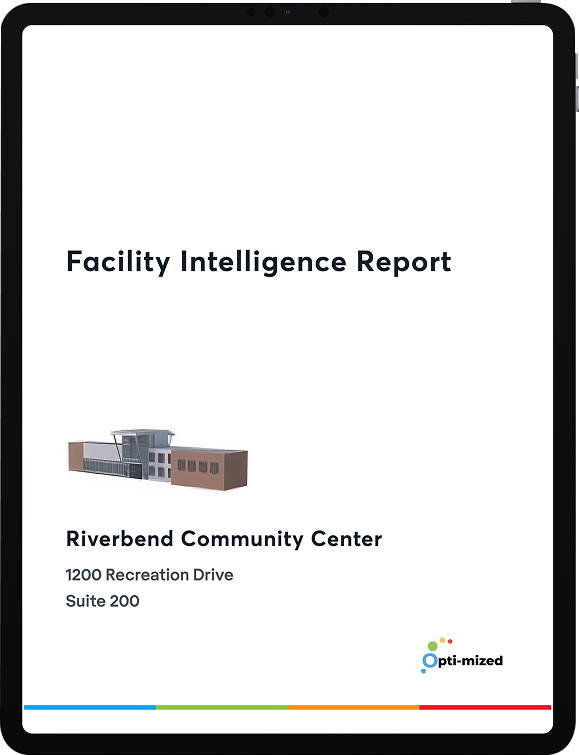
Generate a Money-Loss Report to estimate where energy may already be lost.
Get Your Free Money-Loss ReportOrganizations were being asked to make important operational, maintenance, energy, and capital planning decisions without having a clear understanding of what was happening inside their buildings.

“What surprised us most was not the challenge itself. It was the fact that no one seemed to have solved it.”
We assumed a solution already existed. Somewhere there had to be a platform capable of providing the visibility facility teams needed to truly understand their operations.
A platform that could connect the pieces, uncover hidden opportunities, and transform facility data into actionable intelligence.
So we began searching for it.
What we discovered would ultimately change the direction of everything that followed.
At first, the challenge seemed too important to have gone unsolved.
Facilities are among the most expensive and operationally critical assets many organizations own. They consume energy, require ongoing maintenance, house valuable equipment, and directly impact the people who use them every day.
Surely there had to be a better way to understand what was happening inside them.
We assumed someone had already built a solution capable of providing the visibility facility teams needed.
A platform that could answer questions such as:
 Where is energy being consumed?
What equipment requires attention?
What systems are operating inefficiently?
Where are opportunities being missed?
What decisions should be prioritized first?
The concept seemed straightforward. Capture the information being generated throughout a facility. Transform it into meaningful insight. Provide operators with the visibility needed to make better decisions.
Given the importance of these challenges, we expected the market to be full of solutions capable of delivering exactly that.
The only question was which one to choose.
As we began exploring the market, we had a fairly clear picture of what we expected to find.
We envisioned a platform capable of providing a complete understanding of facility operations.
A solution that could continuously capture information from the systems, equipment, and infrastructure that drive building performance every day.
 Not just energy consumption.
Not just maintenance records.
Not just equipment inventories.
A complete picture.
We expected to find a platform capable of answering the questions facility teams face every day:
What is happening inside the facility?
Where is energy being used?
What equipment requires attention?
What operational issues are developing?
Where are opportunities to reduce costs?
Which projects should be prioritized?
 We expected it to be practical.
We expected it to be affordable.
We expected it to work in facilities of different sizes, ages, and levels of complexity.
Most importantly, we expected it to transform information into answers.
Answers.
The kind of visibility that allows facility teams to make confident decisions about operations, maintenance, energy, and future investments.
From our perspective, the challenge seemed too common and too important for a solution like this not to exist.
We assumed someone had already built it.
The deeper we explored the industry, the more fragmented the landscape became.
Solutions existed.
In fact, there were hundreds of them.
 Some focused on utility bills.
Some focused on equipment maintenance.
Some focused on building automation.
Some focused on asset management.
Some focused on energy monitoring.
Some focused on reporting and analytics.
At first glance, it appeared that the problem had already been solved many times over.
But as we looked closer, a different reality began to emerge.
Most solutions were designed to solve a specific problem rather than provide a complete understanding of facility operations.
One platform could tell you how much energy a building consumed.
 Another could track maintenance activities.
Another could manage assets.
Another could control select pieces of equipment.
Each offered valuable information.
Each served an important purpose.
Yet none seemed capable of answering the broader questions facility teams were trying to solve.
Questions such as:
Why are operating costs increasing?
What systems are contributing to those costs?
What equipment is beginning to underperform?
Where are the greatest opportunities for improvement?
What actions should be prioritized first?
The information existed. The answers often did not.
As we continued our search, it became increasingly clear that facilities weren't suffering from a lack of tools.
They were suffering from a lack of visibility.
The more solutions we reviewed, the clearer the gap became.
The industry wasn't lacking software.
 It wasn't lacking dashboards.
It wasn't lacking reports, studies, consultants, or monitoring platforms.
In many cases, organizations already had access to these tools.
The challenge was that each solution viewed the facility through a different lens.
One focused on energy.
Another focused on maintenance.
Another focused on controls.
Another focused on assets.
Another focused on utility consumption.
Each provided valuable information within its area of expertise.
Yet facilities do not operate in isolated systems.
Energy impacts equipment.
Equipment impacts maintenance.
Another could control select pieces of equipment.
Maintenance impacts reliability.
Reliability impacts operations.
Operations impact costs.
Every system influences another.
Understanding these relationships is often where the greatest opportunities—and the greatest challenges—exist.
As a result, organizations were often left piecing together information from multiple sources, attempting to build a complete understanding of their facilities from disconnected fragments.
The deeper we looked, the more obvious it became that the industry had spent decades solving individual problems.
Very few solutions were designed to help organizations understand how the facility itself was performing as a whole.
As we continued working with facilities and evaluating existing solutions, a simple realization began to emerge.
The problem wasn't a lack of information.
The problem wasn't a lack of reports.
The problem wasn't a lack of technology.
Facility teams didn't need another annual study.
They didn't need another spreadsheet.
They didn't need another dashboard filled with disconnected data.
They needed a practical way to understand what was happening inside their buildings.
Not once per year.
Not once per month.
Every day.
They needed visibility into how equipment was operating.
Visibility into where energy was being consumed.
Visibility into developing maintenance issues.
Visibility into operational inefficiencies.
Visibility into opportunities that would otherwise remain hidden.
Most importantly, they needed this visibility in a way that was practical, affordable, and accessible.
Because the reality is that many facilities do not have dedicated energy managers, engineering teams, or specialized analysts.
The solution couldn't require more complexity. It needed to reduce complexity.
The more facilities we worked with, the clearer it became that what organizations truly needed was not another tool.
They needed a way to continuously understand their own operations.
What was missing wasn't another source of information.
What was missing was a way to transform information into understanding.
The more facilities we worked with, the more obvious the pattern became.
The challenges were different.
The buildings were different.
The equipment was different.
The operators were different.
Yet the same underlying problem continued to surface.
Organizations were being asked to make important operational, maintenance, energy, and capital planning decisions without having a clear understanding of what was happening inside their facilities.
Some facilities had limited information. Others had large amounts of disconnected information. Many had no practical way to continuously capture the operational insight needed to understand building performance.
Regardless of where they started, the outcome was often the same.
At first, we believed the challenge was technological. Then we believed the challenge was data.
Eventually, we realized the challenge was much simpler. Facilities could only act on what they could see. And in most cases, they simply couldn't see enough. That realization changed everything.
Because once we understood that visibility was the foundation of every operational decision, the problem became much clearer.
Before a facility could become more efficient, more reliable, or more intelligent, it first needed a way to understand itself.
By this point, the answer had become clear.
The visibility facilities needed didn't exist because the problem was far more difficult than it first appeared.
Creating it would require a different approach. One built around real facilities, real operators, and real-world challenges.
The question was no longer whether the solution existed. The question became:
Could it be built?
And if so, what would it take to create a platform capable of understanding facilities of every size, age, and level of complexity?
And without visibility, opportunities remain hidden, costs remain unexplained, and decisions become increasingly difficult to make with confidence.
As facilities continue to evolve, the need for a simple, affordable, and scalable way to understand what is happening inside them has never been greater.
That journey would ultimately become the foundation of Opti-mized.
→ Continue Reading: How Opti-mized Came To Life
This report shows you where it’s happening, what’s causing it, and how to fix it.
Get Your Free Money-Loss Report
Get Your Free Money-Loss Report
Stay Informed
Get early access to insights, product updates, and new opportunities to better understand and improve facility performance.
By subscribing, you agree to Opti-mized’s Terms & Conditions and Privacy Policy.