
Behind Every Facility
Every facility tells a different story.
Behind every building is a unique combination of equipment, operating conditions, occupant behaviour, maintenance history, and design decisions accumulated over years—or even decades.

How Opti-mized Came To Life
Before Opti-mized became a platform, it was a journey.
Over the years, we worked alongside hundreds of facilities, uncovering challenges, testing ideas, and discovering what was really preventing organizations from reducing costs and improving performance.
This section shares the key discoveries, lessons, and breakthroughs that ultimately shaped the vision behind Opti-mized.
 More about Opti-mized
Most facilities are losing energy in ways operators never see:
 Off-hours usage
Hidden runtime waste
Peak demand spikes
Systems operating without demand
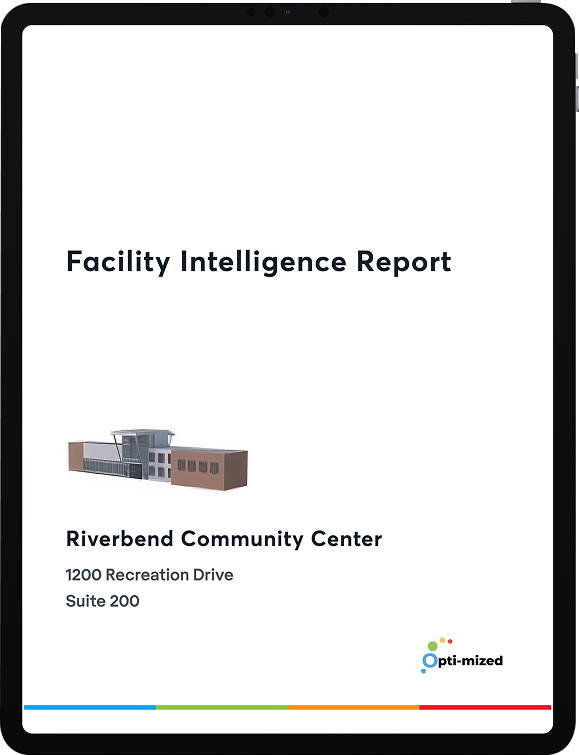
Generate a Money-Loss Report to estimate where energy may already be lost.
Get Your Free Money-Loss ReportSome facilities contain aging infrastructure that has been modified countless times. Others operate with modern equipment, advanced controls, and sophisticated automation systems.
Many contain a combination of both.
Yet regardless of size, age, or complexity, facility teams face the same fundamental challenge:

“How do you make informed decisions when you cannot clearly see what is happening inside the building?”
Energy costs, equipment performance, maintenance issues, operational inefficiencies, and future capital needs are all influenced by thousands of small decisions and interactions occurring every day.
 The challenge wasn't analyzing information.
The challenge was creating an affordable way to capture it.
Without visibility, facility teams were often left relying on utility bills, periodic studies, engineering reports, and assumptions to understand building performance.
Valuable insights remained hidden, and opportunities to reduce costs, improve reliability, and optimize operations were frequently missed.
At first glance, most facilities appear to have everything needed to operate efficiently.
Utility bills track monthly consumption. Building Automation Systems control heating and cooling. Maintenance teams inspect equipment and respond to issues. Consultants perform studies and provide recommendations. Asset inventories document what equipment exists within the facility.
From the outside, it appears that all the information required to understand facility performance is already available.
The assumption is reasonable:
“If all of these tools and resources exist, understanding a facility should be straightforward.”
Unfortunately, facility performance is rarely that simple.
Most systems operate independently, each providing a narrow view of a much larger picture. Utility bills reveal how much energy was consumed, but not where it was used. Maintenance records document repairs, but not the operational conditions that led to them. Building automation systems control select equipment, but often provide limited visibility into the thousands of other devices connected throughout a facility.
As a result, many important questions remain unanswered.
 Where is energy actually being consumed?
Which systems are operating inefficiently?
What equipment is deteriorating?
What is contributing to peak demand?
Which operational changes would deliver the greatest savings?
Where should limited capital dollars be invested first?
Most facilities don't suffer from a lack of information.
They suffer from a lack of visibility.
And without visibility, even the most experienced operators are forced to make critical decisions based on incomplete information.
Every facility operates with a different level of visibility.
Some facilities have Building Automation Systems, maintenance software, asset inventories, engineering studies, and dedicated operations staff. Others may have little more than monthly utility bills and a building owner trying to keep everything running.
There is no standard starting point.
A large recreation complex may have thousands of assets and multiple operators. A small business may have a single owner responsible for customers, staff, finances, operations, and the facility itself.
Yet regardless of size, age, or complexity, every facility owner faces the same fundamental questions:
Where is energy being used?
What equipment is driving operating costs?
What should be repaired, upgraded, or replaced?
Where can savings be found?
What problems are developing that nobody can see?
The challenge is that the information needed to answer these questions is often scattered, incomplete, or simply unavailable.
In many cases, the person responsible for the building is focused on running the organization itself. Managing staff, serving customers, delivering services, meeting deadlines, and handling day-to-day operations often leaves little time to investigate what is happening behind the walls of the facility.
 As a result, opportunities remain hidden.
Equipment continues to deteriorate.
Energy costs continue to rise.
Operational issues go unnoticed.
And important decisions are made with limited visibility into what is actually happening within the building.
From the outside, most facilities appear relatively simple. Lights turn on, heating and cooling systems operate, water flows where it needs to go, occupants remain comfortable, and day-to-day operations continue without interruption.
“What many people don't see is the complex network of systems working behind the scenes to make this possible.”
Every facility is made up of hundreds—or in some cases thousands—of interconnected components operating simultaneously. Lighting systems, HVAC equipment, pumps, motors, controls, refrigeration systems, plug loads, water systems, and building infrastructure all influence one another in ways that are often difficult to see.
 A change in one area of the facility can create unexpected impacts elsewhere.
A failing motor may increase energy consumption.
An overridden schedule may cause equipment to operate longer than intended.
A small control issue may affect comfort, maintenance costs, and energy performance simultaneously.
Over time, facilities also evolve.
Equipment is replaced.
Spaces are renovated.
Operating hours change.
Staff turnover occurs.
Building usage shifts.
What may have been true five years ago may no longer reflect how the facility operates today.
As a result, many facilities become increasingly complex with age, creating a growing gap between how a building was designed to operate and how it actually operates.
Understanding these relationships has traditionally required significant time, experience, studies, and investigation.
And even then, many opportunities remain hidden.
The challenge is not that facilities are broken.
The challenge is that facilities are living, evolving systems that become more complex with every year of operation.
Understanding what is truly happening inside them has never been easy.
Not every problem announces itself.
In fact, many of the most expensive issues within a facility develop quietly over time, hidden behind walls, ceilings, mechanical rooms, and electrical panels.
Equipment continues to operate.
Lights continue to turn on.
Heating and cooling systems continue to run.
From the outside, everything appears normal.
Yet beneath the surface, inefficiencies can gradually accumulate for months—or even years.
A ventilation system may operate longer than necessary.
Lighting schedules may no longer align with occupancy.
Equipment may begin consuming more energy as it ages.
Controls may be overridden and forgotten.
Systems may continue running when no one is present.
Individually, these issues often appear insignificant.
Collectively, they can represent a substantial portion of a facility's operating costs.
The challenge is that these costs rarely appear as alarms, failures, or emergency service calls.
They simply become part of normal operation.
Month after month.
Year after year.
Because they develop gradually, they often go unnoticed until a study is performed, a utility bill increases significantly, or equipment eventually fails.
By that point, the organization may have already spent thousands—or even hundreds of thousands—of dollars unnecessarily.
The most expensive problems in a facility are not always the ones that break. Often, they are the ones nobody realizes exist.
Every day, facility owners, operators, managers, and maintenance teams make decisions that impact energy costs, equipment performance, occupant comfort, and future capital spending.
The challenge is that many of these decisions are made without a clear understanding of what is actually happening inside the facility.
Should equipment be repaired or replaced?
Should a retrofit project move forward?
Which system should be prioritized first?
Why did energy costs increase?
Where should limited capital dollars be invested?
In many cases, the information required to answer these questions is incomplete, unavailable, or spread across multiple sources.
As a result, decisions are often based on utility bills, inspections, engineering studies, contractor recommendations, staff experience, or assumptions about how the facility operates.
While these sources provide valuable insight, they typically represent snapshots in time rather than a complete picture of facility performance.
Facilities operate continuously.
Equipment runs every day.
Operating conditions change constantly.
Yet the information used to make important decisions is often collected periodically or only after a problem becomes noticeable.
This creates a difficult reality for facility teams.
They are expected to make informed decisions about systems they cannot fully see, costs they cannot fully explain, and opportunities they cannot easily identify.
The challenge is not a lack of expertise.
The challenge is a lack of visibility.
Even the most experienced operators can only act on the information available to them.
After working with facilities of different sizes, ages, and complexities, a common pattern began to emerge. The challenges were rarely caused by a lack of effort, experience, or commitment from facility teams.
In most cases, operators, maintenance staff, business owners, and facility managers were already working hard to keep their buildings running efficiently.
The real challenge was visibility.
Regardless of whether a facility was large or small, old or new, simple or complex, the same questions continued to surface:
What is actually happening inside the facility?
Where is energy being consumed?
What equipment requires attention?
Where are opportunities being missed?
Which decisions will have the greatest impact?
The answers were often difficult to find because the information needed to uncover them was either unavailable, disconnected, or simply too difficult to access.
As we worked with more facilities, we discovered that many operational challenges, maintenance issues, and energy losses were not isolated events.
They were symptoms of a larger problem:
“Facilities lacked an affordable and practical way to continuously understand their own operations.”
The more facilities we worked with, the clearer the opportunity became.
The problem wasn't a lack of data.
The problem wasn't a lack of expertise.
The problem wasn't a lack of effort.
The problem was a lack of visibility.
And without visibility, even the best decisions become difficult to make.
After working with facilities of all types, one thing became clear.
The challenges were different.
The buildings were different.
The operators were different.
The technologies were different.
Yet almost every facility shared a common limitation:
“They could only manage what they could see. ”
Yet almost every facility shared a common limitation:
“They could only manage what they could see.”
Whether the facility was supported by sophisticated automation systems or managed by a single owner juggling dozens of responsibilities, visibility ultimately determined the quality of decisions that could be made.
The more visibility available, the more opportunities could be identified.
The less visibility available, the more likely inefficiencies, risks, and costs would remain hidden.
This realization became the foundation for everything that followed.
Every facility is different.
Different equipment.
Different operating conditions.
Different levels of complexity.
Different levels of visibility.
Yet after working with facilities across a wide range of industries, one reality became impossible to ignore:
The people responsible for these buildings were being asked to make important operational, maintenance, energy, and capital planning decisions without having a clear understanding of what was happening inside their facilities.
Many had no practical way to continuously capture the insights needed to understand how their buildings were truly performing.
The challenge was never a lack of effort.
The challenge was never a lack of expertise.
The challenge was visibility.
And without visibility, opportunities remain hidden, costs remain unexplained, and decisions become increasingly difficult to make with confidence.
As facilities continue to evolve, the need for a simple, affordable, and scalable way to understand what is happening inside them has never been greater.
That realization led to a simple question:
What if every facility could finally see what was happening inside its walls?
This report shows you where it’s happening, what’s causing it, and how to fix it.
Get Your Free Money-Loss Report
Get Your Free Money-Loss Report
Stay Informed
Get early access to insights, product updates, and new opportunities to better understand and improve facility performance.
By subscribing, you agree to Opti-mized’s Terms & Conditions and Privacy Policy.